Emotional Trading Psychology: A Practical System for Fear, Greed, and FOMO
I used to think emotional trading meant “weak mindset.”
It usually means the opposite: your process is too vague for real-time pressure. When money is moving fast, vague rules get replaced by fear, greed, and FOMO.
The fix is not to become emotionless. The fix is to build a system that still works when emotions are loud.
My story: the plan was fine, my emotions were loud
I used to blame my results on mindset. The truth was more uncomfortable: my rules were too vague to survive pressure. On green days I felt confident; on red days I chased, cut winners early, and held losers hoping for a miracle. The strategy wasn’t the problem — the lack of a real‑time control system was.
I built a simple “traffic light” routine: green means rules are met, yellow means slow down, red means no trade. It sounds basic, but that tiny pause saved me from most of my impulsive clicks. Pairing it with alerts helped even more, because I wasn’t staring at every candle waiting for something to happen.
The result wasn’t emotional numbness. It was predictable behavior — and predictable behavior is the only thing that scales.
Where I am now: I still feel pressure, but the process absorbs it instead of my P/L.
Quick visual: the workflow at a glance
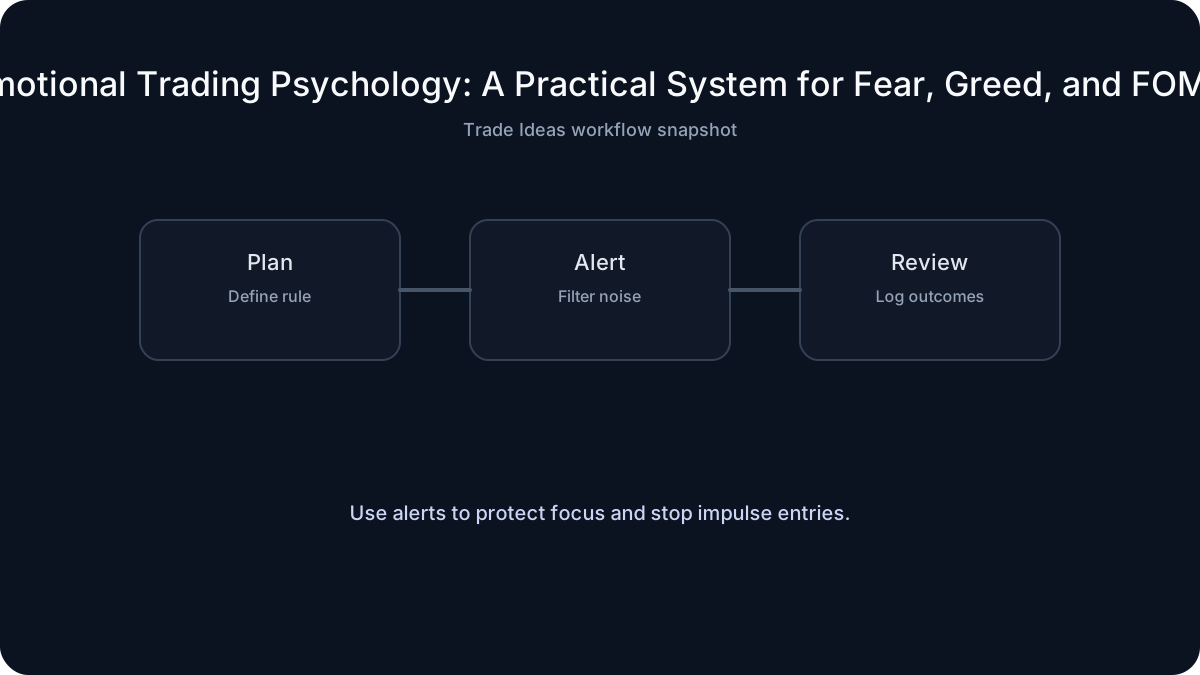
How to use it: - Plan the rule before the open (entry, risk, exit). - Alert only for setups that match the rule. - Review what fired and whether you followed the rule.
How fear and greed usually show up
Most traders can spot this after the fact:
- Fear: early exits on good setups, stop moving, hesitation on valid entries.
- Greed: size creep, late chasing, adding risk without better structure.
- FOMO: entering after the clean move is gone because “I can’t miss this.”
If any of those are frequent, your strategy may be fine. Your execution rules are the leak.
My practical control system (before, during, after)
1) Before the session: pre-commitment rules
I write these before the open:
- Exact setup conditions
- Invalidations (where the trade is wrong)
- Max risk per trade
- No-trade conditions (ex: low liquidity, no catalyst, revenge state)
If it is not written, it is optional. Optional rules fail first.
2) During the session: interruption protocol
Any time I feel urgency, I run this 3-step check:
- Pause 20–30 seconds
- Breathe (physically break the impulse)
- Checklist: setup valid, stop clear, size correct, context aligned
If one box fails, I pass.
That single interruption prevents a lot of emotional damage.
3) After the session: behavior scorecard
I score the day on execution, not P/L:
- Rule adherence (1–5)
- Emotional control (1–5)
- Setup quality (1–5)
- Risk discipline (1–5)
Then one line: “Where did emotion override rules today?”
The goal is trend improvement week over week, not one “perfect” day.
Use alerts to reduce emotional clicks
Chart-watching everything creates emotional pressure. Alert-driven workflows reduce that pressure because decisions happen against predefined criteria.
If you want to see the workflow I use, start here: Trade Ideas review.
FAQ
Can emotional trading ever be fully eliminated?
No. The target is not zero emotion. The target is stable behavior when emotion appears.
What is the fastest fix for FOMO?
Define one setup, one trigger, one invalidation, and one pass rule. If you missed first clean entry, skip and wait for next valid structure.
How long until this improves?
If you journal and use a scorecard daily, most traders see meaningful behavior improvement in 2–4 weeks.
Final thought
Your edge does not disappear because you feel fear or greed. It disappears when feelings replace rules.
Build a system that protects execution when pressure rises.
If you want to make this part of your daily routine, compare options here: Trade Ideas pricing and Trade Ideas plans.
Risk disclosure: Trading involves substantial risk and is not suitable for every investor.
Next step
Pick the right Trade Ideas plan
If you're ready to decide, start with the review and then compare pricing + plans.