No Backtesting, No Edge: Why Guessing Fails
I used to call it intuition.
What it really was: untested guessing dressed up as confidence.
I’d take a setup a few times, win two, lose one, and decide it “worked.” Then the market changed, the losses stacked up, and I realized I never actually knew if the setup had an edge.
My story: I had a favorite setup — and no proof it worked
I was proud of my “feel” for momentum. If the chart looked right, I took it. The wins felt validating, so I sized up. The losses felt like bad luck, so I sized up even more.
Then I finally pulled 30 trades and did the math. The win rate was mediocre, the average loser was bigger than the average winner, and my “edge” was just noise.
The fix was simple but humbling:
- Define the setup in plain rules (entry, stop, exit).
- Test a real sample (at least 30–50 trades).
- Only size up if the stats hold.
Once I did that, I stopped guessing and started trading.
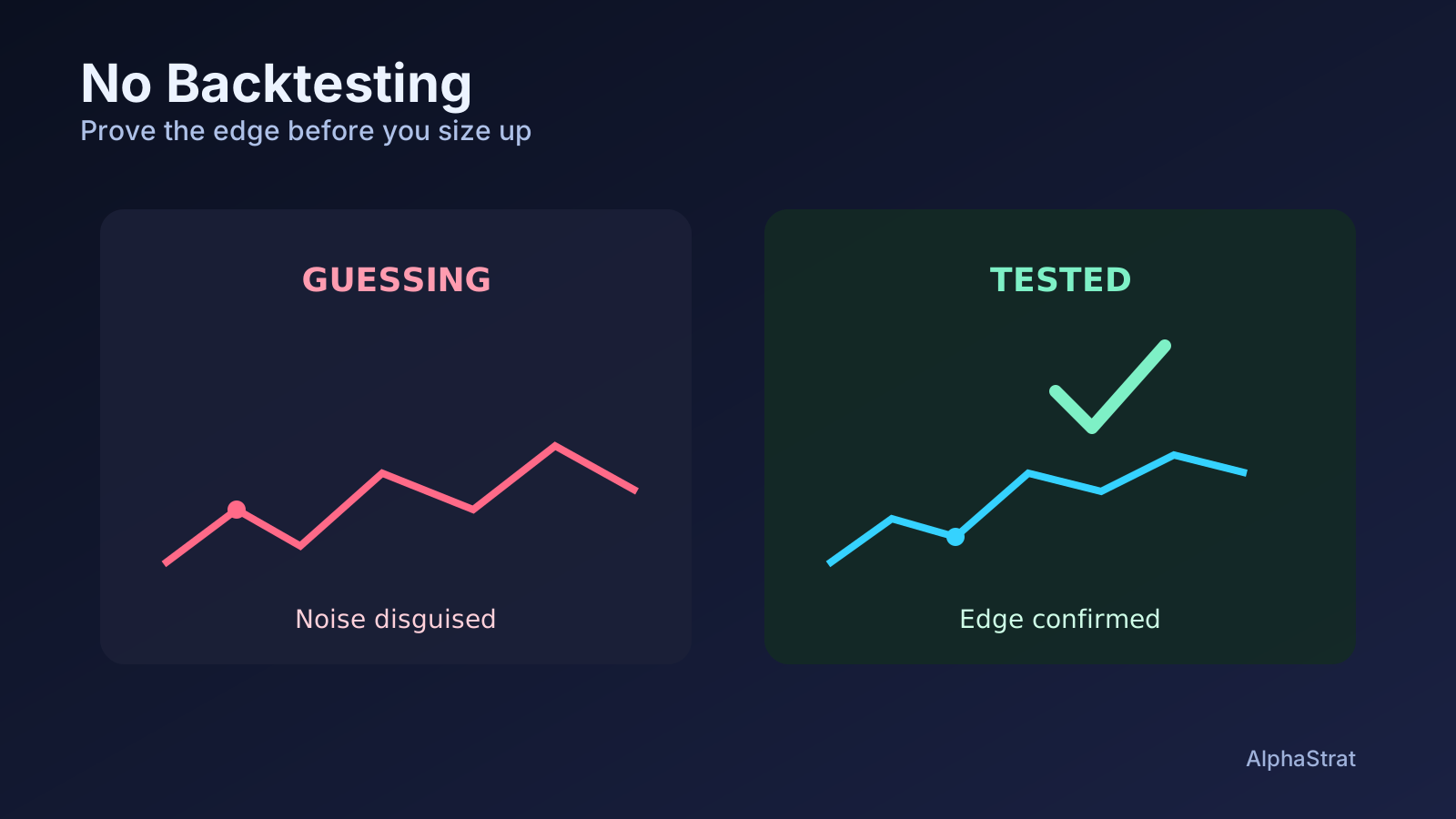
Where I am now: I still trust instincts — but I only act on them after the data proves the edge.
Quick visual: the workflow at a glance
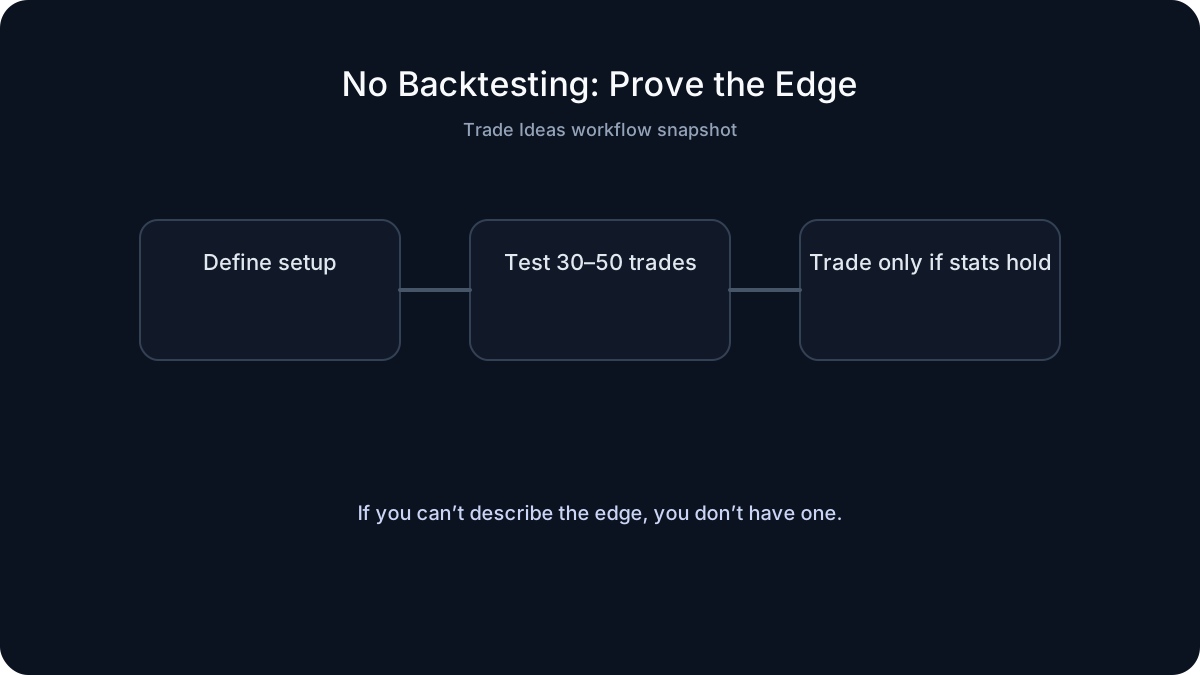
How to use it: - Define the setup in rules. - Test a real sample size. - Trade only if the stats survive.
Why “feels good” isn’t an edge
A few wins don’t prove anything. Markets are noisy, and short streaks happen by accident. If you can’t answer these questions, you don’t have an edge:
- What’s the win rate over 30–50 trades?
- What’s the average R (reward‑to‑risk) per trade?
- What happens in different market regimes?
No data = no edge. Just variance.
The lightweight backtest that actually works
You don’t need a quant lab. You need consistency:
- Define the setup (filters, entry trigger, stop, target).
- Pick a sample size (30–50 trades minimum).
- Track 3 numbers: win rate, average win, average loss.
- Calculate expectancy (win rate × avg win) – (loss rate × avg loss).
If the expectancy is positive after fees and slippage, you have something real.
A simple “edge proof” rule
I use this rule now:
- If I can’t describe the edge in one sentence, I don’t trade it.
- If I can’t prove it in 30–50 trades, I don’t size it.
It’s boring. It’s also what keeps my account alive.
How Trade Ideas helps validate your edge
Trade Ideas makes testing easier because I can:
- Build a scanner with clear entry rules.
- Use OddsMaker to see how that setup historically behaves.
- Tighten filters until the stats improve instead of guessing.
If you want to see what a tested setup looks like in practice, start with the Trade Ideas review.
Quick self‑check before you trade a “new” setup
Ask yourself: - Can I show 30+ trades with consistent rules? - Do I know the average win and loss in R? - Would I still take it if the last 3 trades were losers?
If the answer is no, you’re still guessing.
Final thought
A setup isn’t real until it survives the data.
Test first, size later — and protect your capital long enough for the edge to pay you.
When you’re ready to compare tools that help you validate setups faster, see Trade Ideas pricing or Trade Ideas plans.
Risk disclosure: Trading involves risk. Past performance is not indicative of future results.
Next step
Pick the right Trade Ideas plan
If you're ready to decide, start with the review and then compare pricing + plans.