Overtrading in Day Trading: The Habit That Quietly Destroys Good Setups
I used to think active meant productive.
If I took 12 trades in a day, I felt like I was “working hard.” If I only took 2, I felt like I was missing out. The problem? Most of those extra trades came from boredom, impatience, or trying to force action. They weren’t quality setups. They were noise.
That habit quietly crushed my consistency.
My story: I mistook activity for progress
My early months were pure noise. I’d open my platform at the bell with 20 tickers and a caffeine-fueled confidence that more clicks meant more learning. By 11 a.m. I’d be 8–12 trades deep, exhausted, and somehow down despite “being right” on a few of them. When I finally printed a month of statements, the pattern was ugly: the first 2–3 trades were solid, and the rest were impulse clean‑up.
The turning point was a hard rule I set after a brutal week: no trade without a written setup tag. If I couldn’t name the setup, I couldn’t click. It forced me to slow down, pre‑plan, and accept that waiting was part of the job. I also started letting alerts do the watching so I could breathe instead of chase.
That shift didn’t just reduce trades — it reduced shame. I stopped ending the day wondering why I felt busy but broke.
Where I am now: I average 2–4 high‑quality trades a day, and the calm is worth more than any extra click.
Quick visual: the workflow at a glance
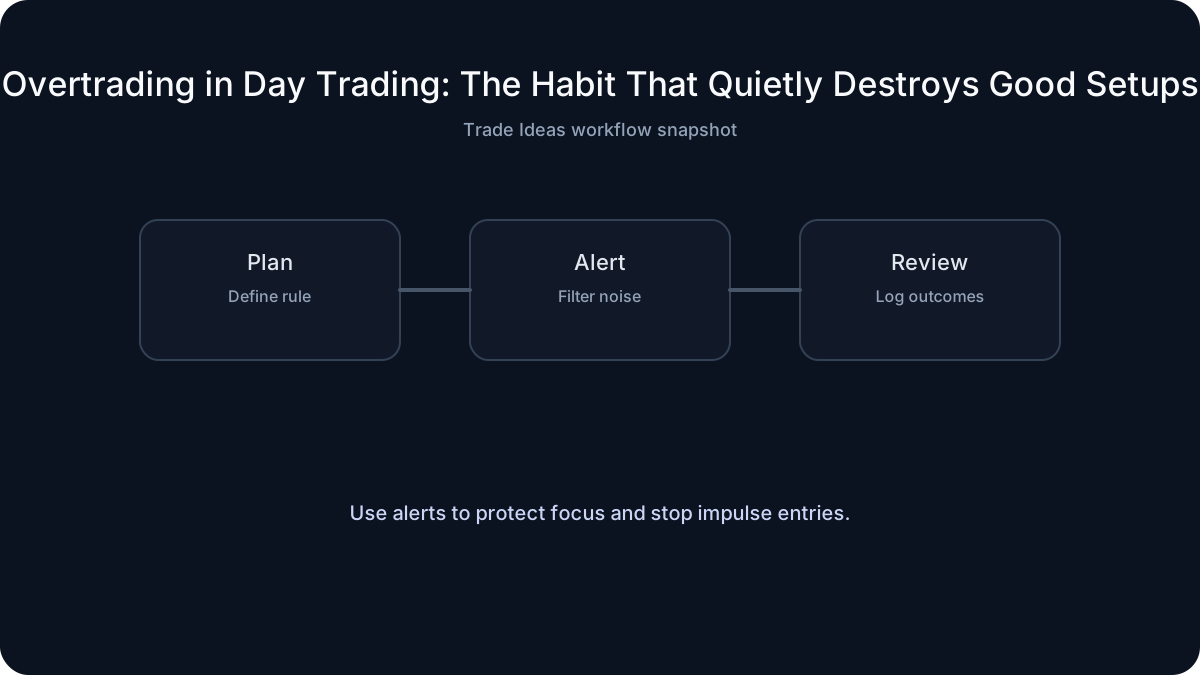
How to use it: - Plan the rule before the open (entry, risk, exit). - Alert only for setups that match the rule. - Review what fired and whether you followed the rule.
The hidden cost of overtrading
Overtrading doesn’t always look dramatic. It usually shows up as: - entering late because you’re afraid to miss the move, - taking mediocre setups because your first idea didn’t trigger, - jumping from ticker to ticker with no clear edge, - and ending the day mentally exhausted with nothing useful learned.
Even when you catch a winner, the extra low-quality trades can erase it through poor entries, bad risk/reward, and emotional mistakes.
What finally helped me: “A-setup only” rules
I had to stop asking, “Can this move?” and start asking, “Does this meet my setup?”
My checklist now has 4 required conditions: 1. Market context makes sense (trend/range and volatility are acceptable) 2. Volume confirms participation (not a random low-liquidity pop) 3. Invalidation is clear (I know exactly where I’m wrong) 4. Minimum reward-to-risk is acceptable (if it’s not at least 2:1, I pass)
If one condition is missing, I do nothing.
That single change cut my trade count and improved my execution quality almost immediately.
Why alerts changed everything
The old me tried to watch everything. The new me lets a scanner narrow the field and waits.
Instead of forcing ideas, I only review symbols when my criteria are already close to valid. That shift removes a lot of impulsive clicking and decision fatigue.
If you want to see how that workflow works in practice, start here: Trade Ideas review.
A simple 7-day reset if you’re overtrading right now
For one week: - Cap yourself at 3 trades per day - No new trades after 2 consecutive losses - Log every trade with one tag: A-setup, B-setup, or impulse - Review at the end of the week: what % were true A-setups?
Most traders are surprised by the answer.
Final thought
Overtrading feels like control. It’s usually just anxiety with hotkeys.
If you want better results, trade less—but trade cleaner. Build a repeatable setup, let the right alerts bring opportunities to you, and keep your risk rules non-negotiable.
When you’re ready to build that system, compare options here: Trade Ideas pricing and Trade Ideas plans.
Risk disclosure: Trading involves risk. Past performance is not indicative of future results.
Next step
Pick the right Trade Ideas plan
If you're ready to decide, start with the review and then compare pricing + plans.