Revenge Trading After a Loss: The Reset Protocol That Saved My Week
Revenge trading never starts with anger.
For me, it started with one thought: “I just need one good trade to get back to even.”
That sentence used to cost me a lot of money.
I’d take a clean loss, then immediately hunt for another setup—usually one that didn’t meet my rules. If it lost, I sized up on the next one. By the end of the day, I wasn’t trading a strategy. I was trading my emotions.
My story: one loss turned into a week of damage
I can still remember the first time I revenge‑traded. I took a clean loss on a breakout, watched price grind back without me, and jumped in late just to “get it back.” That second entry was worse, the stop was wider, and the loss was bigger. The worst part? I kept going. By the end of the day I wasn’t trading a setup — I was trading my ego.
The fix was brutal but simple: a mandatory cooldown after any emotionally charged loss. I step away, log the trade, and require a reset checklist before the next entry. When I skip that, I don’t just lose money — I lose the entire day’s decision quality.
That rule turned revenge trading into a rare event instead of a recurring habit.
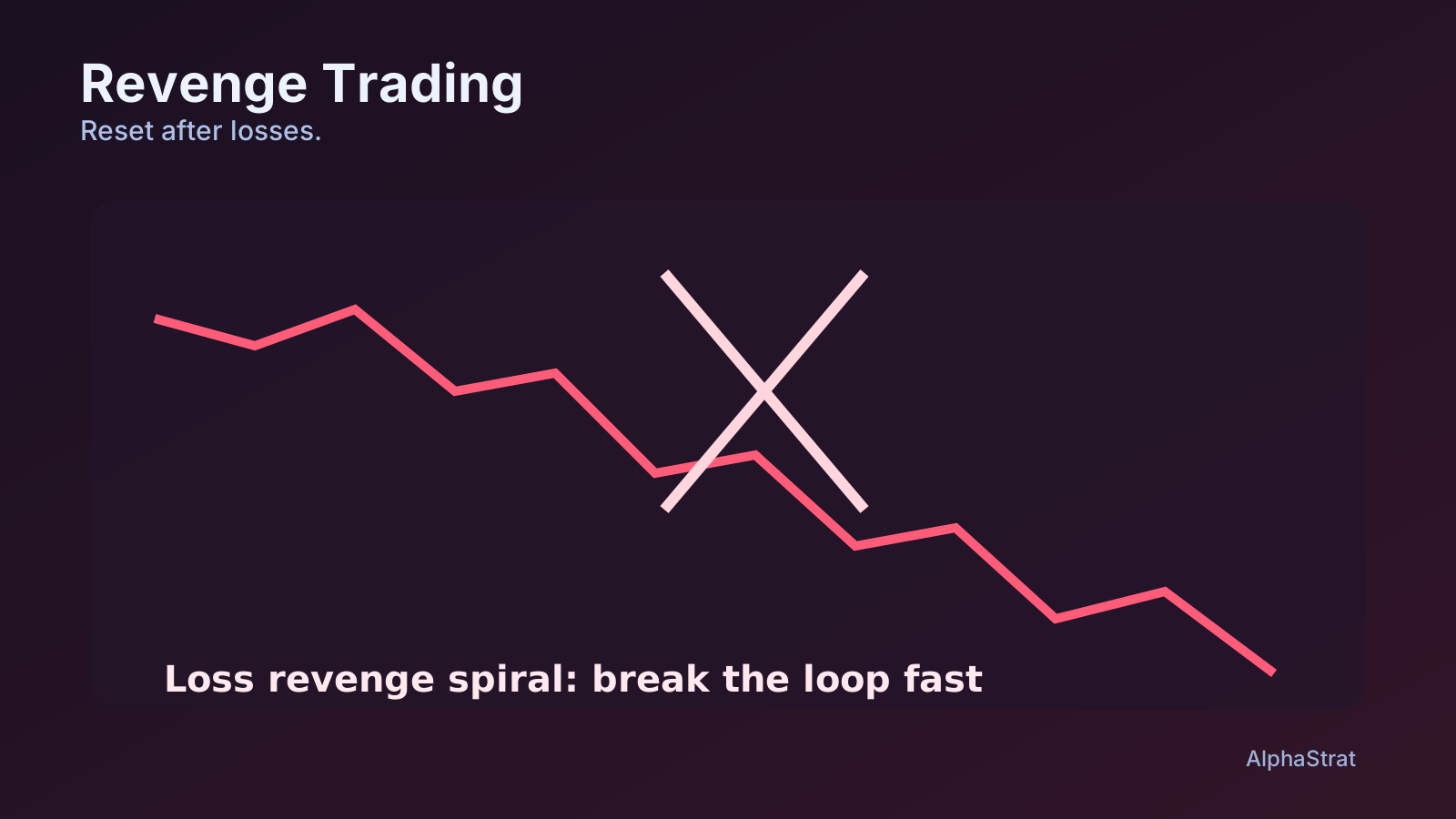
Where I am now: I treat one loss as data, not a dare to get even.
Quick visual: the workflow at a glance
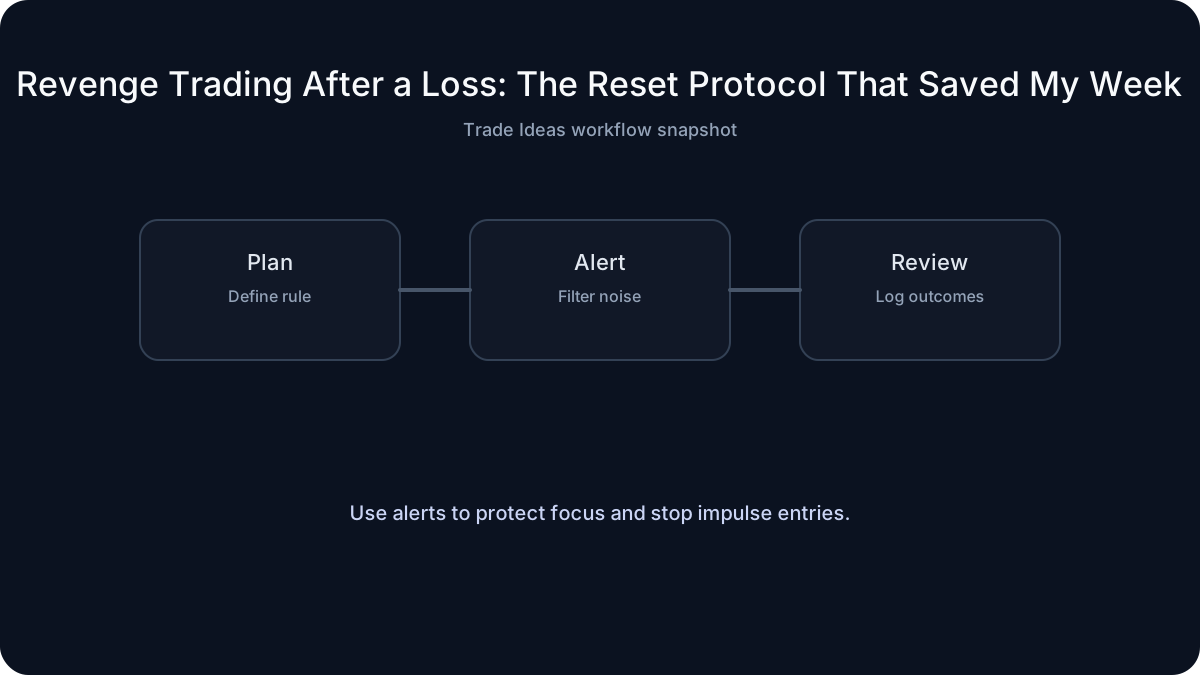
How to use it: - Plan the rule before the open (entry, risk, exit). - Alert only for setups that match the rule. - Review what fired and whether you followed the rule.
The revenge loop most traders miss
It usually looks like this: 1. Planned trade loses 2. Confidence drops 3. Urgency rises (“make it back now”) 4. Standards drop 5. Risk increases 6. Bigger loss, more urgency
The fix isn’t “be tougher.” The fix is a hard reset process you follow automatically.
My 30-minute reset protocol
After any emotionally disruptive loss, I now do this: - Step away from screens for 10 minutes - Write what happened in 3 lines (setup, execution, emotion) - Check if my rules were followed - If yes: accept normal loss and continue cautiously - If no: no new trade for 30 minutes minimum
That pause interrupts the urge to “win it back.”
Session guardrails that prevent damage
I also use two hard limits: - Max daily loss limit (stop trading for the day once hit) - Max attempts per setup (no endless re-entry loop)
These rules protect capital and mental state. Without them, one bad trade can turn into a bad week.
Use alerts to reduce impulse entries
One of the easiest ways to avoid revenge clicks is to only act on predefined alerts. If a setup doesn’t trigger your criteria, it’s not your trade.
If you want a practical look at alert-based execution, start with this: Trade Ideas review.
Journal prompt that catches revenge behavior fast
At the end of each session, answer: - Did I trade to execute my plan, or to recover P/L? - Which trade was rule-based vs emotion-based? - What was the exact trigger for my worst decision?
You can’t improve what you don’t name.
Final thought
Losses are part of trading. Revenge is optional.
The goal isn’t to avoid red days. The goal is to avoid red days that come from abandoning your process.
If you’re rebuilding your workflow, check available options here: Trade Ideas coupon and Trade Ideas plans.
Risk disclosure: Trading involves substantial risk and is not suitable for every investor.
Next step
Pick the right Trade Ideas plan
If you're ready to decide, start with the review and then compare pricing + plans.