Stop-Loss Placement Mistakes: Why Tight Stops Keep Getting Tagged
I used to think a tighter stop meant I was a smarter trader.
Ten cents of risk, twenty cents of reward — clean, surgical, “disciplined.” The only problem was my stop got hit constantly, and price would move in my direction five minutes later.
I wasn’t wrong about the trade. I was wrong about the placement.
My story: I kept getting stopped out by the noise
I had a go‑to breakout setup that worked… when I could actually stay in it. My charts were clean and my entries were solid, but my stops were always just a hair too close. I’d put them exactly at support, or the last candle low, or the most obvious line on the chart.
Then I watched the replay: price would tick down, tap my stop, and rip. Over and over.
The fix wasn’t a magical entry. It was a stop rule that forced me to respect volatility:
- Stops go beyond structure, not on it.
- The size of the stop is driven by volatility, not ego.
- If the stop is “too big,” the position gets smaller — not the stop.
Once I started sizing to volatility and giving the trade room to breathe, the fake‑out stop‑outs disappeared.
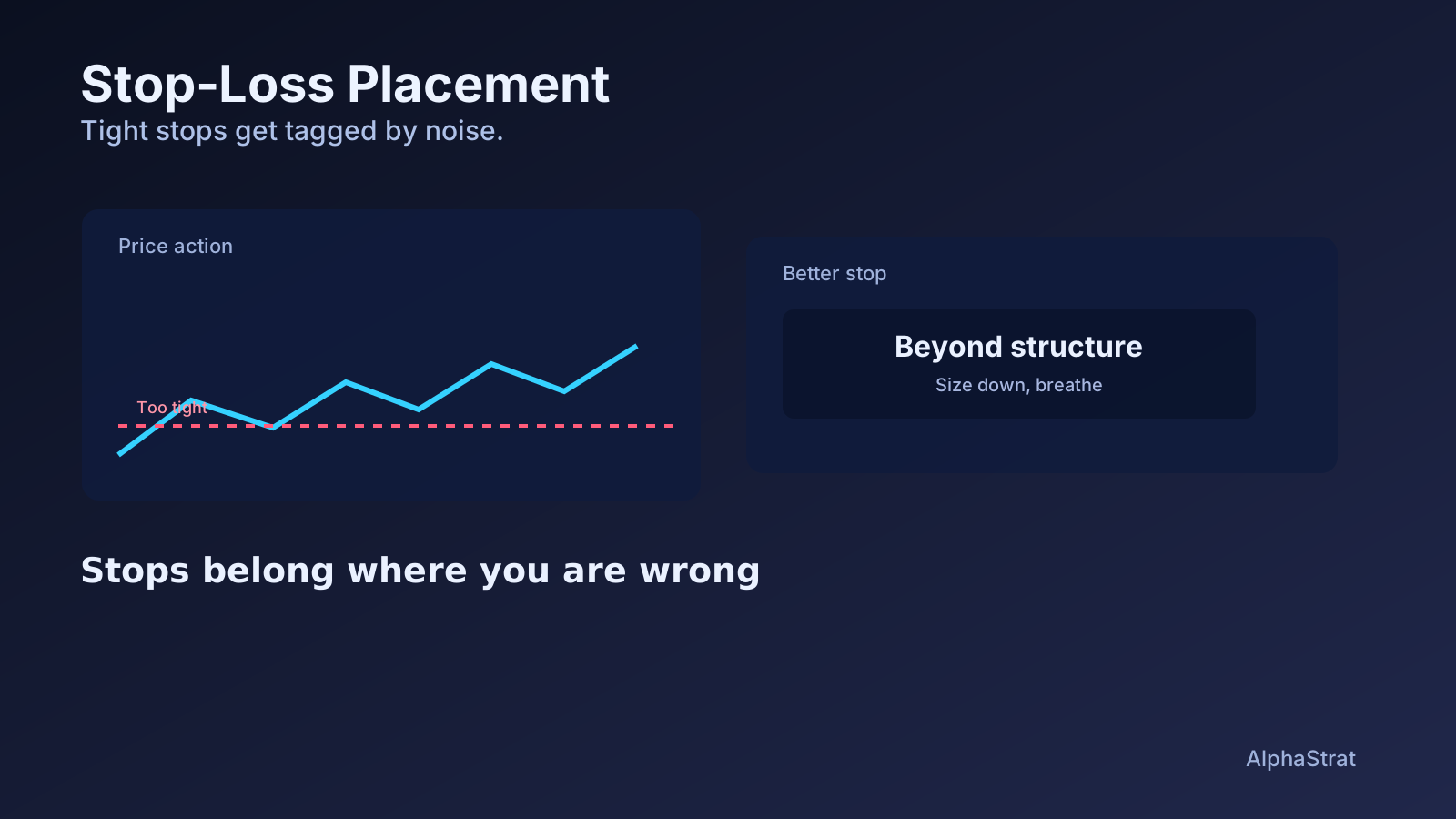
Where I am now: I’d rather be slightly late than constantly wrong. A good stop is placed where I’m actually wrong — not where I’m just uncomfortable.
Quick visual: the workflow at a glance
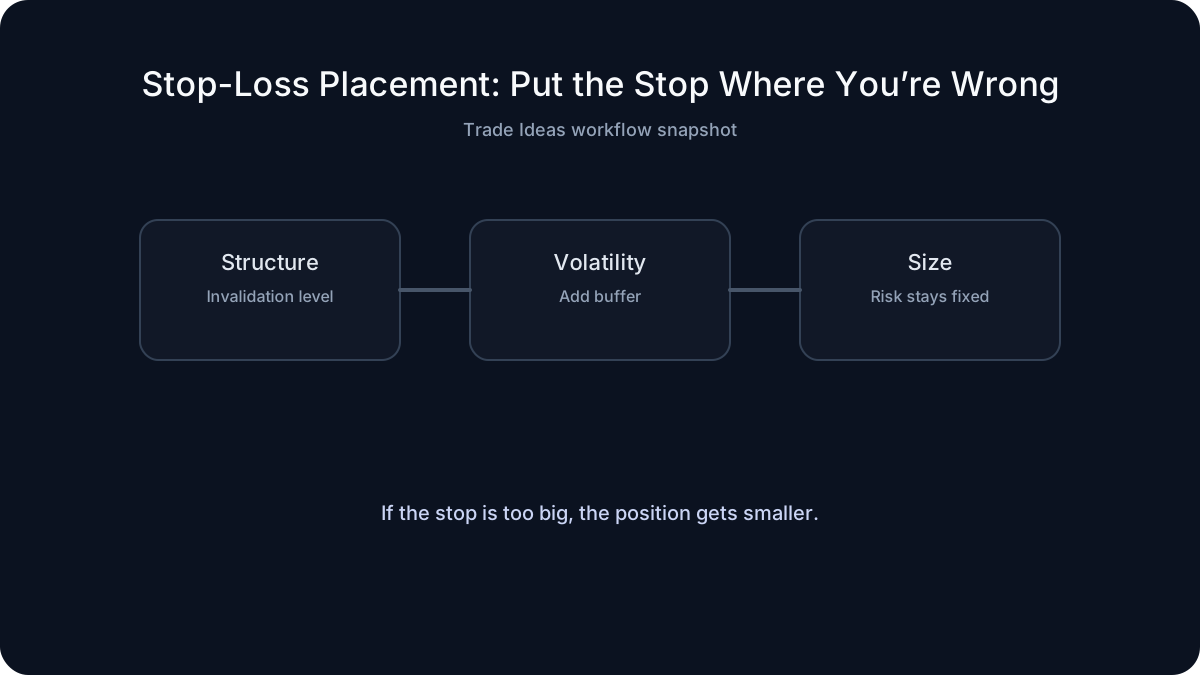
How to use it: - Anchor the stop beyond structure. - Size to volatility, not gut feel. - Commit to the invalidation level.
Why tight stops feel safe (and aren’t)
Tight stops make a trade feel controlled, but they turn normal noise into a loss. Markets breathe. If your stop sits inside that breathing room, you’re getting clipped by volatility — not proven wrong.
Two signs your stop is too tight:
- You get stopped out and price immediately moves your way.
- You win only when the move is extremely fast.
That’s not edge. That’s luck plus timing.
The 3‑part stop framework that actually works
Here’s the framework I use now:
- Structure: Place the stop beyond the level that invalidates the idea (prior low, key VWAP, major demand). If that breaks, you’re wrong.
- Volatility: Add a buffer based on ATR or recent swing range. If a stock moves 40–60 cents per minute, a 10‑cent stop is fantasy.
- Position size: If the stop is wider, size down. Risk is controlled by size, not by squeezing the stop.
That combination keeps you in the trade long enough to let the setup work.
My stop‑placement routine (10 minutes pre‑market)
- Mark the invalidation level (where the thesis breaks).
- Measure the average swing on the last 20 bars.
- Add a buffer (10–20% beyond structure).
- Set the share size to keep risk fixed.
- Set alerts so I’m not guessing in real time.
How Trade Ideas helps me place stops with discipline
Trade Ideas made this easier because I could pre‑define the volatility context and only alert on trades that fit the stop framework.
- I build scans that match average true range and liquidity.
- I set alerts for structure breaks so I’m not chasing.
- I skip setups where the volatility would force an oversized stop.
If you want to see how that workflow looks, start here: Trade Ideas review.
Quick self‑check before you place the stop
Ask yourself: - Is this stop beyond the level that proves me wrong? - Did I size down instead of squeezing it tighter? - Would this trade survive normal volatility?
If the answer is no, the stop is too tight — or the trade isn’t worth it.
Final thought
A good stop doesn’t protect your ego. It protects your account.
Give the trade the room it needs, size down to stay safe, and let the setup work.
When you’re ready to compare tools that make that discipline easier, check Trade Ideas pricing or Trade Ideas plans.
Risk disclosure: Trading involves risk. Past performance is not indicative of future results.
Next step
Pick the right Trade Ideas plan
If you're ready to decide, start with the review and then compare pricing + plans.