Strategy Hopping in Trading: Why Switching Systems Kills Consistency
I used to change strategies the same way I changed playlists — the second something got boring or painful, I’d skip to the next track.
A red week? New setup. A slow month? New indicator. A big loss? New system.
The problem wasn’t the strategies. It was me restarting the experiment before the data had a chance to mean anything.
My story: I reset the clock every time it got uncomfortable
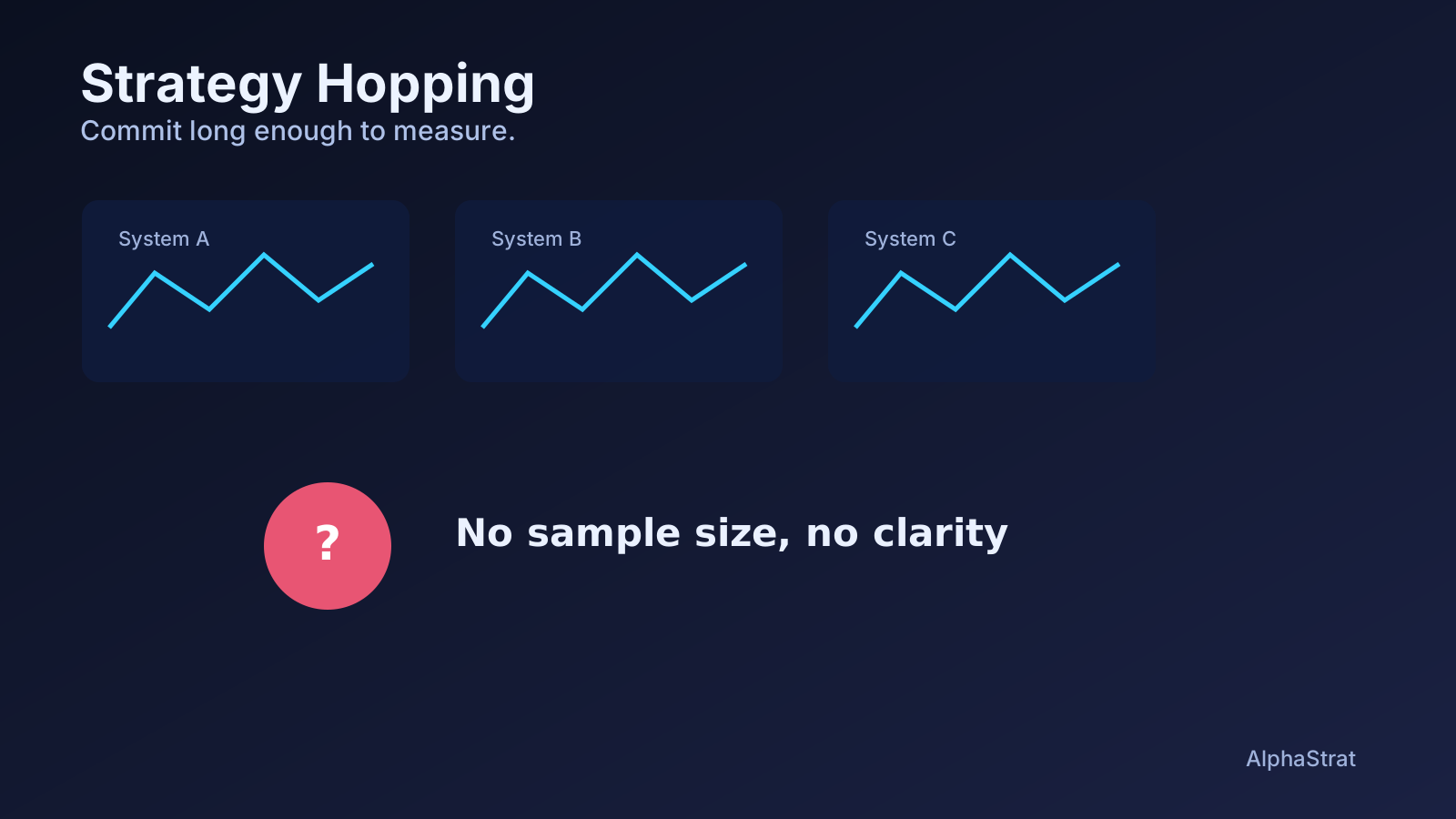
I had three tabs open at all times: a breakout checklist, a mean‑reversion play, and a trend‑follow cheat sheet. I’d jump between them based on whatever looked “hot” that week. If I won, I’d claim I’d found my edge. If I lost, I’d declare the system “dead.”
When I finally pulled my journal, the pattern was obvious: I never gave any strategy long enough to prove itself. I was sampling the market at random and calling it research.
The turning point was a simple rule: 30 trading days, no switching. I committed to one setup, logged every trade, and forced myself to evaluate results only at the end of the window. It was uncomfortable, but for the first time I could see real signals: which market conditions worked, where execution broke, and whether the idea actually had expectancy.
Where I am now: I keep a “system scorecard” and only change one variable at a time. The confidence that comes from real sample size is worth more than the temporary excitement of a new strategy.
Quick visual: the workflow at a glance
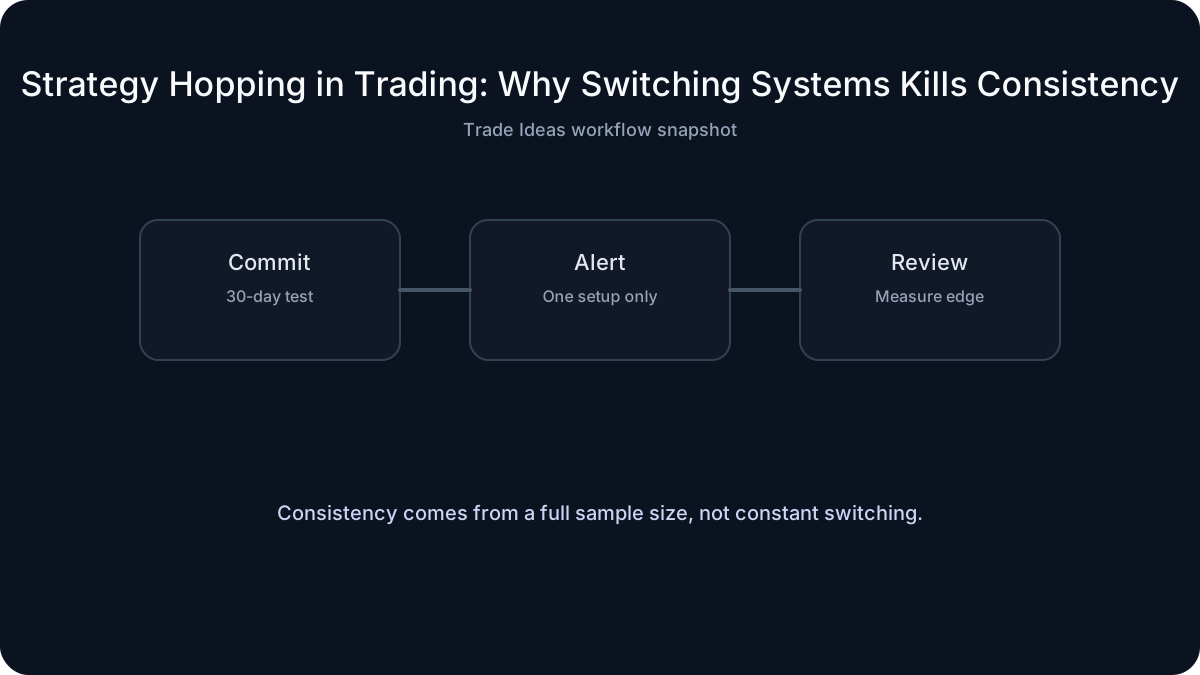
How to use it: - Commit to a single setup for a full test window. - Alert only for that setup so you don’t drift. - Review the sample size before you judge it.
Why system switching feels smart (and isn’t)
Strategy hopping feels like optimization, but it’s usually avoidance. It protects you from the hardest part of trading: sitting through normal variance.
Most strategies go through a short drawdown or flat stretch. If you abandon them during that phase, you never learn whether the strategy actually works — or whether the problem is execution.
The 30‑day evaluation framework
Here’s the framework that stopped my switching:
- Pick one setup (and define the exact entry/exit conditions).
- Set a minimum sample size (20–30 trades or 30 sessions).
- Log every trade with tags (A‑setup, B‑setup, mistake, context).
- Review only at the end (not mid‑week, not after one red day).
- Adjust one variable at a time (entries OR exits OR sizing — never all three).
When I started tracking this way, I could finally tell if a strategy was broken or just bruised.
How Trade Ideas helped me stay consistent
The biggest trap was “just checking” other setups. Trade Ideas fixed that by making my focus automatic.
- I built one alert tied to my chosen setup.
- I muted everything else.
- I only reviewed symbols that met my exact criteria.
That simple constraint removed the temptation to drift. If it didn’t fire, I didn’t trade. If it did, I had a reason to act.
If you want to see how it’s set up, start here: Trade Ideas review.
A quick self‑check before you switch systems
Ask yourself: - Did I complete my minimum sample size? - Do I have documented errors that are execution‑related? - Is the market regime actually incompatible with the strategy — or am I just impatient?
If you can’t answer those, switching is just guesswork.
Final thought
The market doesn’t reward constant reinvention. It rewards consistent execution.
Commit to a system long enough to learn it. Measure it. Then refine it with evidence — not emotion.
When you’re ready to compare tools that make that discipline easier, start with Trade Ideas pricing or Trade Ideas plans.
Risk disclosure: Trading involves risk. Past performance is not indicative of future results.
Next step
Pick the right Trade Ideas plan
If you're ready to decide, start with the review and then compare pricing + plans.