Trading Discipline Problems: How to Stop Breaking Your Plan Just This Once
Discipline breakdown does not usually look dramatic. It looks like one small exception:
"This one is different."
Then one exception turns into three, and the day stops matching your plan.
My story: my rules existed… until they didn’t
I had rules on paper and broke them whenever the day felt “special.” If a stock was moving fast, I’d widen stops. If I was up early, I’d size up. It was subtle, but it was constant — and it trained me to ignore my own boundaries.
Discipline finally clicked when I made the rules unavoidable. I added pre‑trade checkboxes, cut my watchlist, and built a “no‑trade” list that auto‑blocked me on low‑quality days. It wasn’t about willpower; it was about engineering fewer chances to cheat.
Once I respected my own rules, I started trusting my process again.
Where I am now: I treat discipline as a system, not a personality trait.
Quick visual: the workflow at a glance
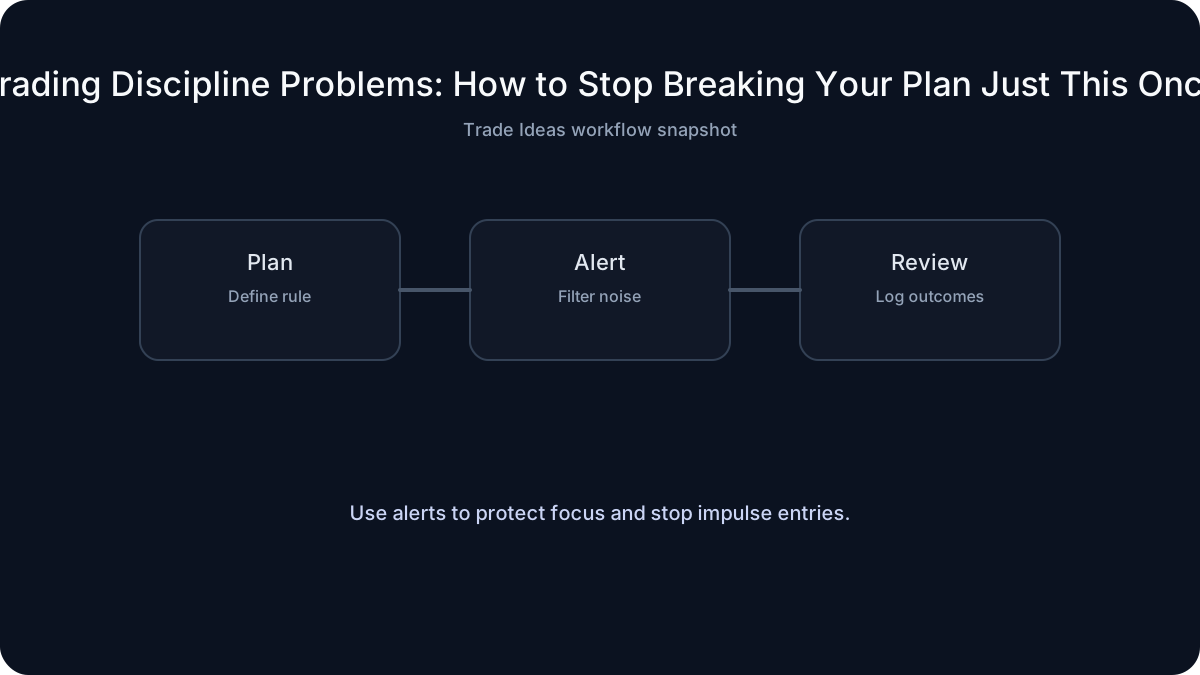
How to use it: - Plan the rule before the open (entry, risk, exit). - Alert only for setups that match the rule. - Review what fired and whether you followed the rule.
Why discipline collapses (even for experienced traders)
Most discipline failures come from process gaps, not personality flaws:
- Ambiguity: rules are too vague to execute under pressure
- Fatigue: too many decisions, not enough predefined structure
- Outcome bias: changing good process because one trade lost
- Context drift: forcing setups in poor market conditions
If your process is loose, your behavior will be loose.
The pre-trade rule checklist I actually use
Before every entry:
- Setup name is clear
- Context supports setup
- Entry trigger is objective
- Invalidation level is defined
- Risk size is within limits
- Exit structure is preplanned
If one item fails, no trade.
This sounds strict, but strict is cheaper than emotional improvisation.
Daily accountability loop
I score every session on execution quality:
- Rule adherence
- Risk adherence
- Setup quality
- Emotional control
Then one line:
"Where did I break process and why?"
The next day starts by reviewing that line.
Weekly review that keeps discipline compounding
At week-end:
- Count rule breaks by type
- Identify highest-cost rule break
- Define one constraint for next week
Examples:
- No trade after 2 execution mistakes
- No new symbols outside watchlist
- No add-ons unless A-setup criteria still valid
This turns discipline into an operating system, not motivation.
Use alerts to reduce temptation
Discipline is easier when fewer low-quality options hit your screen. Define scanner criteria so only tradable candidates appear.
If you want to see that workflow in practice, start here: Trade Ideas review.
FAQ
Is discipline a personality trait?
Not mostly. It is a process design problem. Better rules and tighter constraints improve behavior quickly.
What is the fastest discipline upgrade?
Use a non-negotiable pre-trade checklist and a max daily loss cutoff. Those two rules prevent most expensive errors.
How do I handle repeated rule breaks?
Reduce complexity and size until adherence improves. You should scale process stability before scaling risk.
Final thought
Discipline is not about being perfect. It is about being predictable enough for your edge to show up over a sample size.
Tight process beats intense willpower.
If you want a scanner workflow that supports rule-based execution, check options here: Trade Ideas coupon and Trade Ideas plans.
Risk disclosure: Trading involves risk. Past performance is not indicative of future results.
Next step
Pick the right Trade Ideas plan
If you're ready to decide, start with the review and then compare pricing + plans.