Trading Journal Benefits: Why I Improved Faster Once I Started Logging Every Trade
For a long time, I thought I was “learning” because I traded every day.
But when I looked back, I kept making the same mistakes — week after week.
The change didn’t come from a new indicator. It came from one habit: actually logging my trades.
A trading journal turns random wins and losses into feedback you can use. Without it, you’re just guessing.
My story: journaling felt optional until it wasn’t
For years I thought journaling was for “serious” traders, not me. I kept my trades in my head and trusted my memory — which turned out to be wildly biased. I remembered the big winners and forgot the small rule breaks that bled me out. Once I started logging every trade with a simple tag, the leaks became obvious.
Within two weeks I saw patterns I couldn’t unsee: I over‑traded after 11 a.m., I forced entries after missing the first push, and I ignored my best setups on days I felt “off.” That kind of clarity changes behavior fast, because it removes the debate.
The journal didn’t just help me improve. It made me honest.
Where I am now: I still make mistakes, but I catch them quickly — and I fix them with evidence, not vibes.
Quick visual: the workflow at a glance
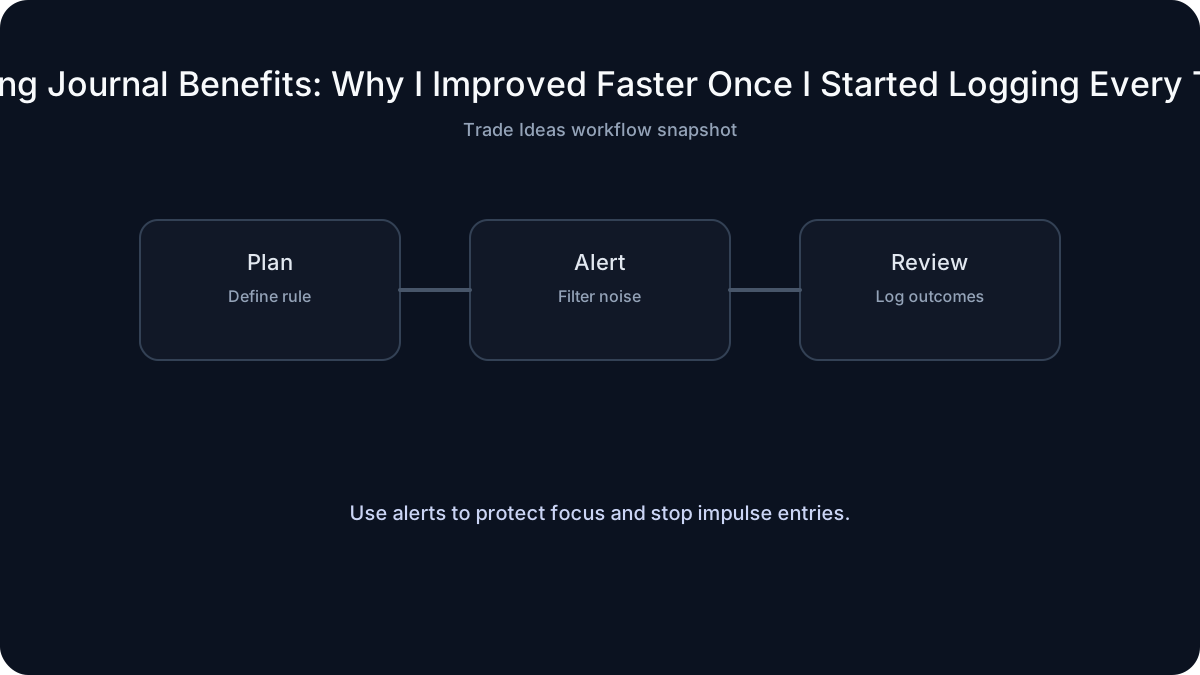
How to use it: - Plan the rule before the open (entry, risk, exit). - Alert only for setups that match the rule. - Review what fired and whether you followed the rule.
The journal problem most traders don’t notice
If you don’t log, you can’t see patterns like: - You win more when you trade one setup — but you keep mixing five. - Your best days happen when you wait for the first 30 minutes — but you rush anyway. - You break your stop rule on red days — and those are the days that hurt most.
A journal gives you receipts. It shows the truth, not just the story you tell yourself.
What to log (keep it simple)
You don’t need a complicated spreadsheet. Start with this: - Setup name (A-setup, B-setup, or "impulse") - Entry + stop + target (or reason for no target) - Risk % and whether you followed size rules - Emotion tag (calm, anxious, FOMO, frustrated) - Rule adherence score (1–5)
That’s it. The goal is consistency, not perfection.
A copy/paste journal template
If you fill this out after every trade, you’ll spot the leaks fast.
Weekly review ritual (this is where the gains happen)
Every Friday, I answer three questions: 1. What was my best trade and why? 2. What was my worst trade and which rule was broken? 3. Which setup did I execute most cleanly all week?
The goal isn’t to be perfect. It’s to be less random next week.
How alerts + a journal work together
When your entries come from alerts/scanners (instead of random clicking), your journal entries become cleaner. That makes the feedback loop stronger.
If you want to see how I build that alert-driven workflow, start here: Trade Ideas review.
Final thought
Most traders don’t have a strategy problem. They have a feedback problem.
A journal fixes that. It turns “I think” into “I know.”
If you want to pair that habit with a platform built for repeatable execution, compare options here: Trade Ideas plans and Trade Ideas pricing.
Risk disclosure: Trading involves risk. Past performance is not indicative of future results.
Next step
Pick the right Trade Ideas plan
If you're ready to decide, start with the review and then compare pricing + plans.