Trading Market Regime Changes: Why Your Strategy Works Until It Does Not
One of the most frustrating phases in trading is this:
"I am doing the same thing, but results suddenly got worse."
That usually is not random bad luck. It is often a regime mismatch.
Your setup may be fine, but the market environment changed.
My story: I kept forcing a trend strategy in a chop market
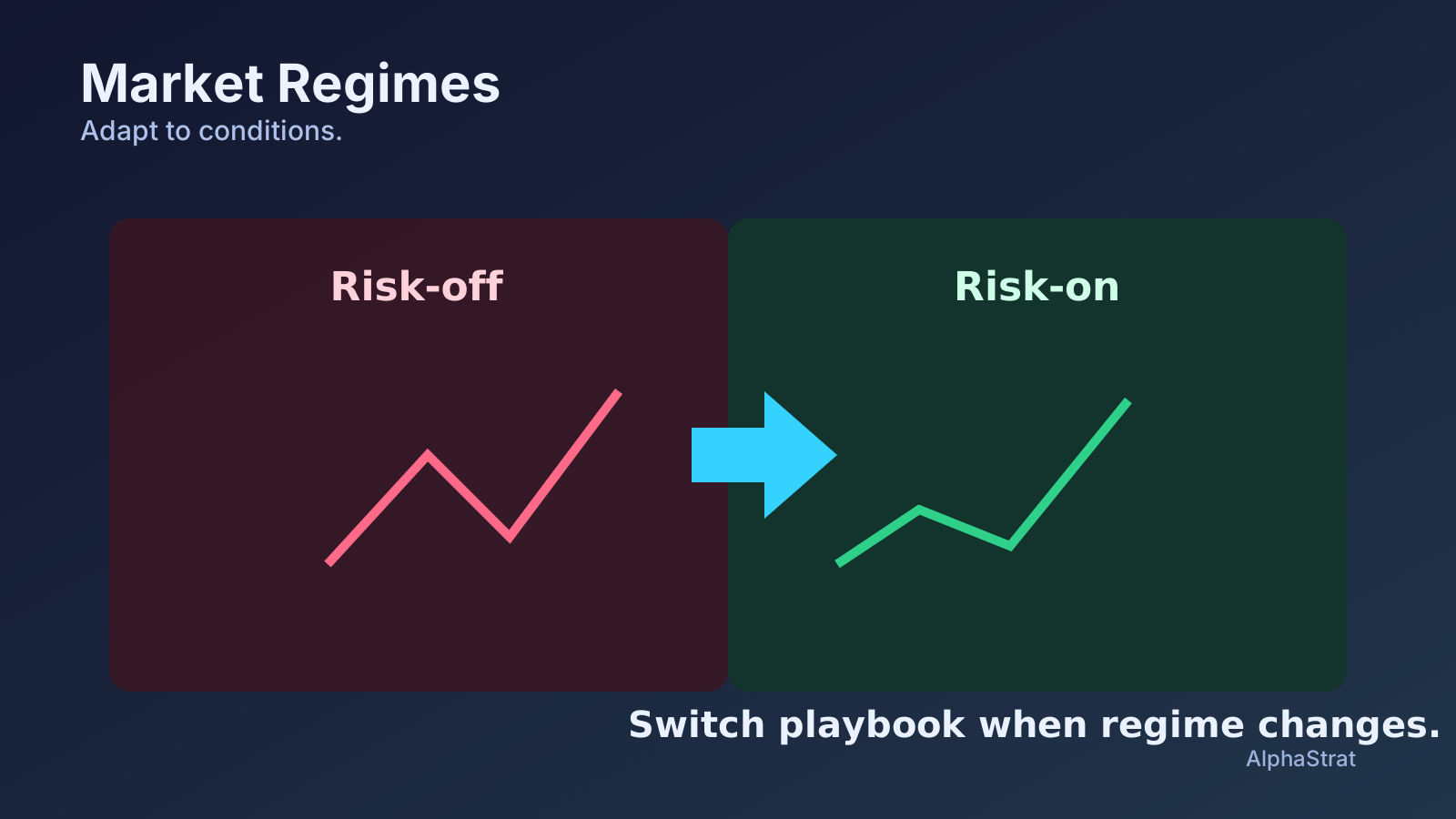
There was a stretch where every breakout I took failed. I assumed I was executing poorly, but the real issue was regime. I was running a momentum playbook in a sideways market that punished follow‑through. I kept repeating the same setup because it had worked last month — and the market had moved on.
Once I started labeling the regime first (trend, chop, high‑vol, low‑vol), my trades made sense again. I’d either adapt the setup or stand down. It felt like giving myself permission to not trade when conditions didn’t match my edge.
That one habit — identify regime before entries — saved me from weeks of unnecessary frustration.
Where I am now: I trade the market that’s in front of me, not the one I wish existed.
Quick visual: the workflow at a glance
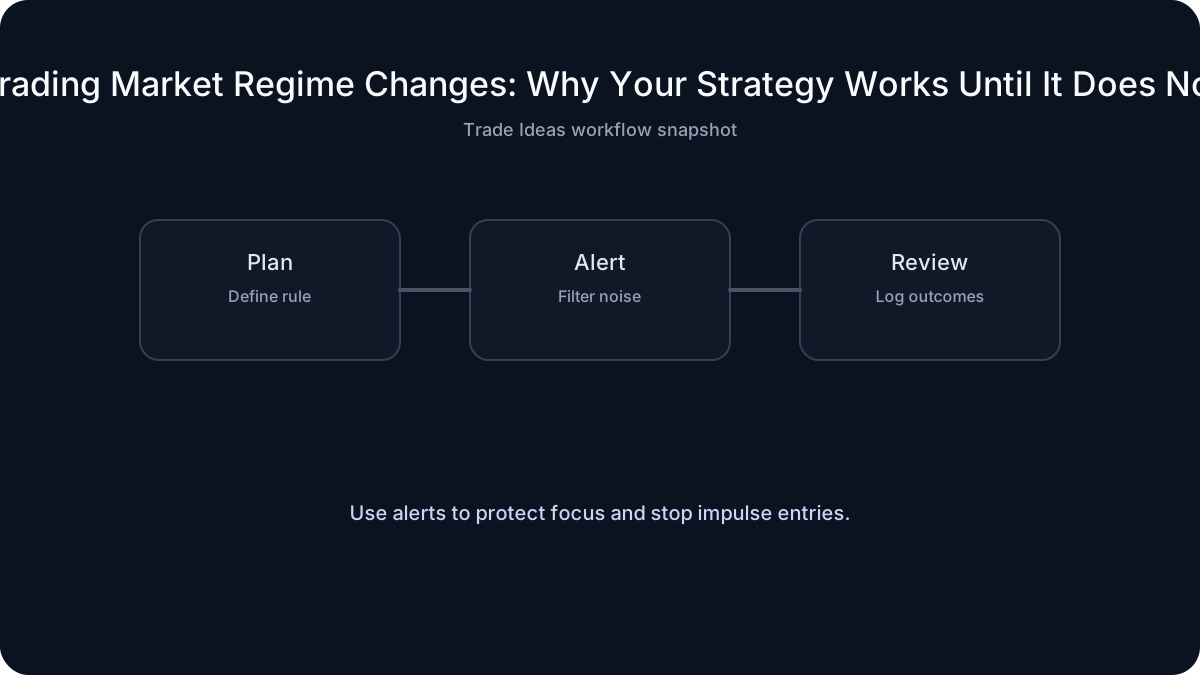
How to use it: - Plan the rule before the open (entry, risk, exit). - Alert only for setups that match the rule. - Review what fired and whether you followed the rule.
What market regime means (in practical terms)
Think in four broad states:
- Trend + normal volatility
- Trend + high volatility
- Range + normal volatility
- Range + high volatility
Each state rewards different entry timing, stop distance, and holding behavior.
Signals I check daily before sizing up
- Index trend quality (clean trend vs chop)
- Volatility expansion/compression
- Breadth and participation quality
- Liquidity quality in my watchlist names
If those are misaligned, I reduce size and tighten expectations.
How I adapt scanners by regime
In high volatility
- Raise liquidity thresholds
- Tighten spread tolerance
- Reduce watchlist size
- Prefer clearer structure and stronger confirmations
In low volatility/chop
- Cut trade frequency
- Use narrower expectation bands
- Avoid forcing breakout follow-through assumptions
In unstable transitions
- Trade smaller
- Shorten hold time
- Prioritize clean A-setups only
Risk adaptation rules
When regime quality drops, I reduce risk.
Example framework:
- High-quality regime: normal risk unit
- Mixed regime: 0.5x risk
- Poor regime: 0.25x risk or no-trade
This keeps you alive while the market changes character.
Monthly regime review (10-minute worksheet)
At month-end, review:
- Which regime produced your best executions?
- Which regime caused most rule breaks?
- Where did your scanner criteria lag the environment?
- What one adjustment improved signal quality?
This turns "my edge disappeared" into a measurable adaptation loop.
If you want practical scanner examples, start here: Trade Ideas review.
FAQ
How often do regimes change?
Sometimes slowly, sometimes abruptly around macro events. That is why daily context checks matter.
Should I use different setups per regime?
You can, but keep it constrained. Better to have one core setup with regime-specific thresholds than five unrelated systems.
What is the biggest mistake during regime shifts?
Keeping size and frequency unchanged while signal quality has clearly dropped.
Final thought
Good traders do not just execute. They adapt without abandoning discipline.
When regime changes, your goal is not to force old behavior. Your goal is to protect capital and adjust criteria deliberately.
If you want filtering tools built for adaptation, compare options here: Trade Ideas pricing and Trade Ideas plans.
Risk disclosure: Trading involves substantial risk and is not suitable for every investor.
Next step
Pick the right Trade Ideas plan
If you're ready to decide, start with the review and then compare pricing + plans.