Missing Trade Entries and Exits? Build an Alert-Driven Workflow
I used to miss my best trades by minutes.
I’d be watching four charts, checking news, and waiting for a “perfect” moment. Then the move would happen—fast—while I was staring at the wrong ticker. By the time I noticed, the entry was gone and my exit was guesswork.
That’s when I realized the issue wasn’t “speed.” It was workflow.
My story: I kept missing my own best trades
I used to tell myself I was “fast enough.” The truth was I was reacting to the market instead of being ready for it. I’d bounce between charts, watch a move take off, and then feel that awful mix of urgency and regret. My entries were late, my exits were guesses, and my confidence kept shrinking.
The fix was a boring one: I reduced the chaos. I picked two setups, wrote the exact trigger, and let alerts do the watching. When the alert fired, I either had the setup… or I didn’t. That clarity stopped the constant second‑guessing.
Now I still miss trades sometimes — but I don’t miss the right ones. That change is everything.
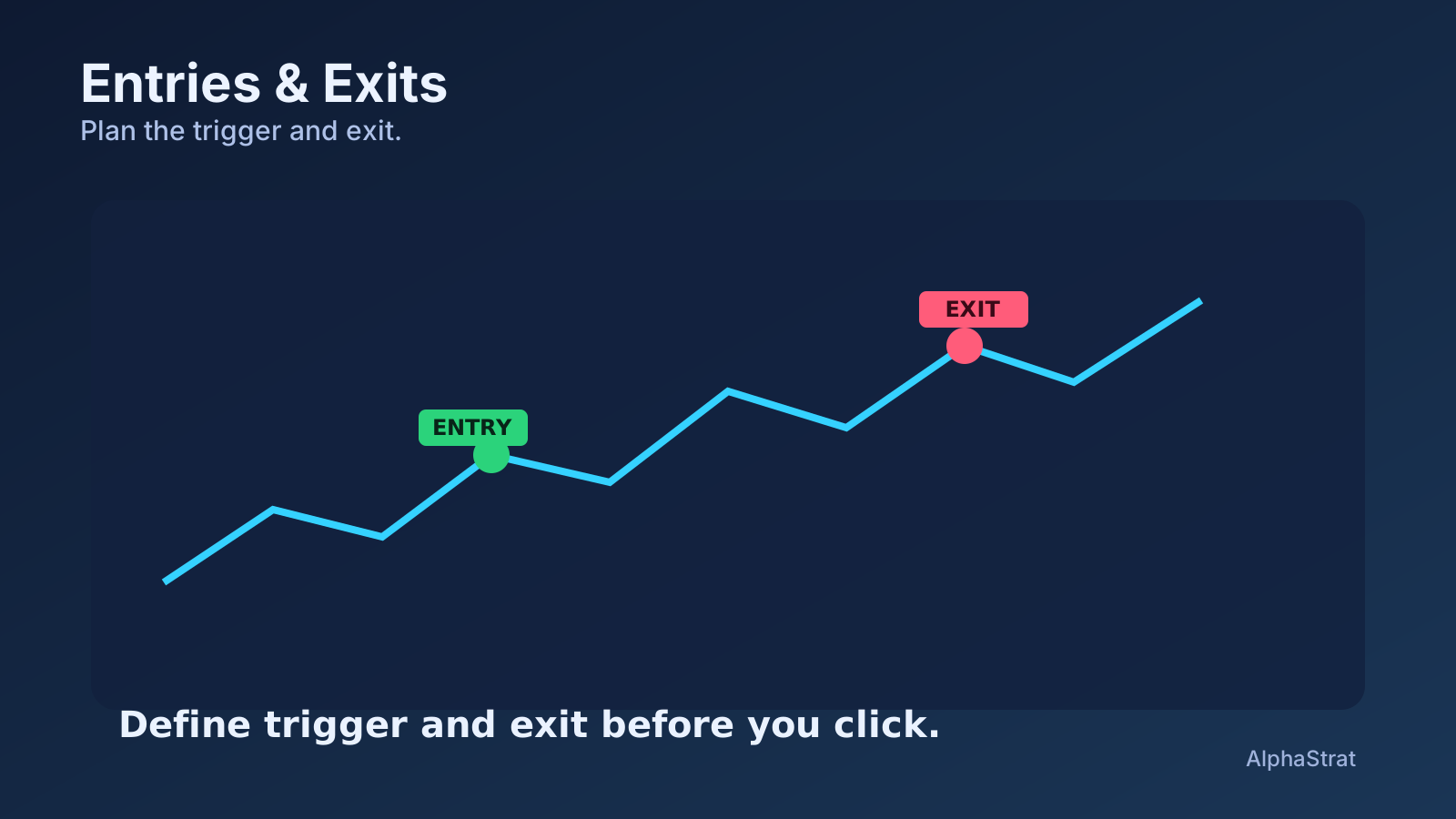
Where I am now: My workflow catches the trades I actually want, without the panic.
Quick visual: the workflow at a glance
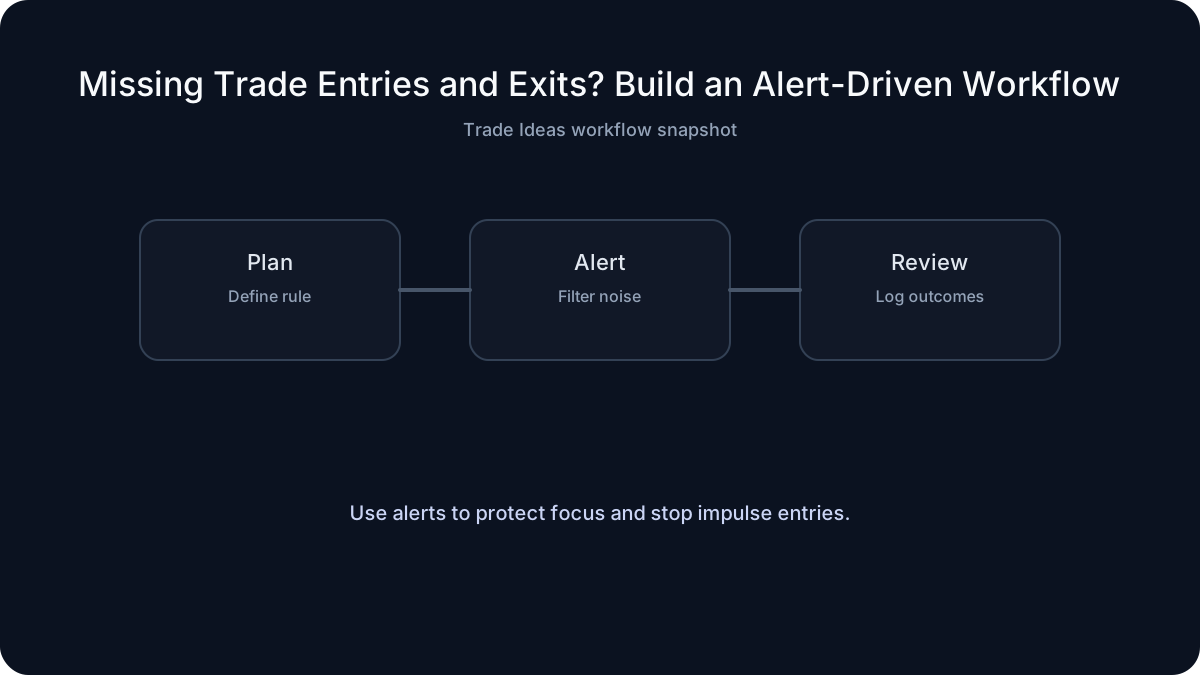
How to use it: - Plan the rule before the open (entry, risk, exit). - Alert only for setups that match the rule. - Review what fired and whether you followed the rule.
Next step
Turn this into a repeatable workflow
If you only do one thing next, tighten your lane and reduce noise. That's how Trade Ideas becomes usable.
Why watching everything doesn’t work
When you try to track too many symbols at once, three things happen: - You enter late because you’re always reacting instead of prepared. - You exit randomly because you missed your planned levels. - You chase the chart that’s already moving, not the one you actually planned.
You can’t fix that with more screen time. You fix it by narrowing the field and letting alerts do the watching.
The alert-driven workflow that fixed my timing
I keep this simple on purpose:
- Pick 1–2 setup types (that’s it)
- Define the exact trigger (price level, volume spike, breakout condition)
- Build a small watchlist (5–8 names max)
- Set alerts for the trigger
- Only act when an alert fires and the checklist passes
This flips the dynamic. Instead of hunting for trades, I let trades come to me only when they match the plan.
If you want to see how I set this up in practice, start here: Trade Ideas review.
Entry timing rules that prevent late clicks
Even with alerts, I still follow three timing rules: - No entry without an invalidation level (I must know where I’m wrong) - No entry if I missed the first clean push (late entries usually turn into bad R/R) - No entry if volume is fading (momentum matters for timing)
These rules prevent the worst kind of trades: the “I already missed it, so I’ll force it” trades.
Exit playbook: plan it before you need it
Most exit mistakes happen because people decide after they’re in the trade.
I keep it structured: - Stop: hard level that invalidates the setup - First target: partial exit (lock in) at 1R–2R - Runner: only if the move stays clean
That way, the decision is made before emotions get involved.
Notification hygiene (so alerts actually help)
Alerts work only if you trust them. I keep them clean by: - Limiting alerts to one or two setups - Using a single sound (so I don’t get numb) - Turning off anything that isn’t actionable
If every ping is a maybe, every ping becomes noise.
The end-of-day “miss audit” (10 minutes)
At the end of the session, I answer: - Which alerts fired and I ignored (and why)? - Which trades were late? What rule would have prevented it? - Did I follow my exit playbook on every trade?
This feedback loop is what actually fixes timing.
Final thought
Missing entries and exits isn’t a personality flaw. It’s a system problem.
Build the alert workflow, reduce the watchlist, and pre-plan your exits. The goal isn’t to catch everything. The goal is to catch the right ones consistently.
If you want a platform built for alert-driven execution, compare options here: Trade Ideas plans and Trade Ideas pricing.
Risk disclosure: Trading involves risk. Past performance is not indicative of future results.
Next step
Pick the right Trade Ideas plan
If you're ready to decide, start with the review and then compare pricing + plans.
