Pre-Market Routine for Day Traders: The 30-Minute Prep That Prevents Chaos
The market open used to feel like chaos.
I’d sit down a few minutes before the bell, scan random charts, and react to whatever moved first. Some days I got lucky. Most days I felt behind from minute one.
Everything changed when I started treating pre-market like a preparation window—not optional extra work.
My story: mornings were chaos until I built a ritual
I used to roll into the desk five minutes before the open and hope my instincts were sharp. Some days I got lucky. Most days I felt behind, chasing whatever was already moving. The stress wasn’t just the P/L — it was the feeling that I never had a plan.
The moment I treated pre‑market like a required part of the job, everything stabilized. A short routine gave me context, focus, and a reason to say no to random setups. It also made my first trade calmer because I already knew the levels and the invalidation before the bell.
It sounds small, but a consistent morning routine turned my entire day from reactive to deliberate.
Where I am now: I start the session with a plan instead of a guess.
Quick visual: the workflow at a glance
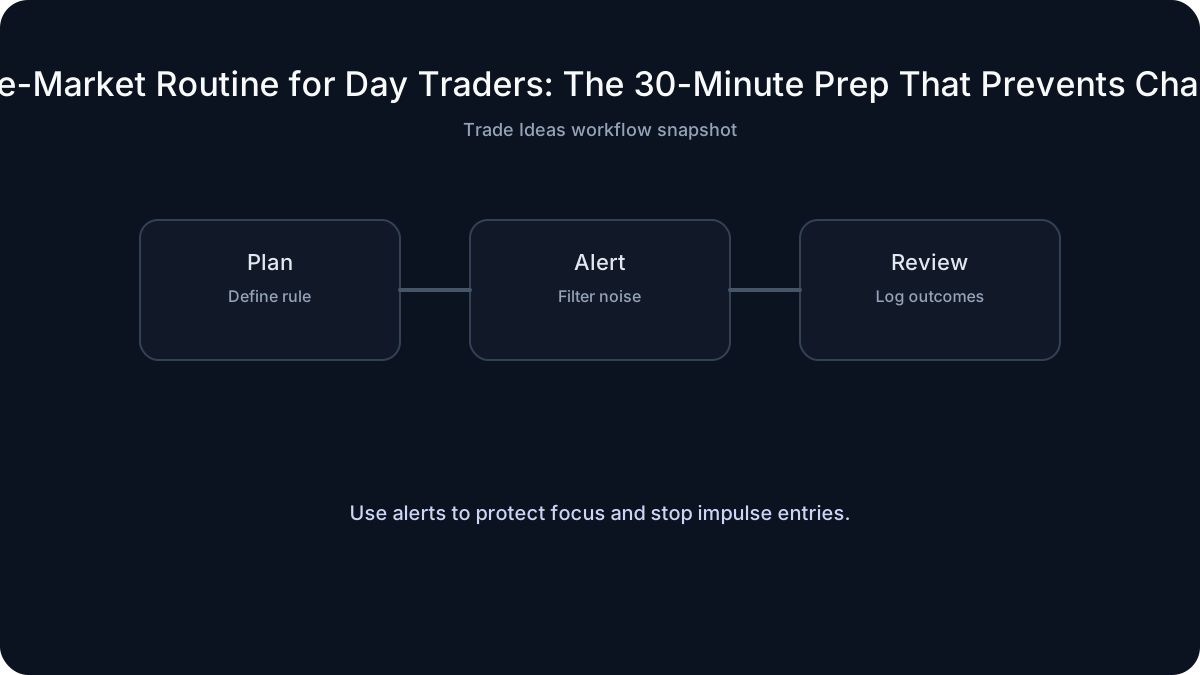
How to use it: - Plan the rule before the open (entry, risk, exit). - Alert only for setups that match the rule. - Review what fired and whether you followed the rule.
Next step
Turn this into a repeatable workflow
If you only do one thing next, tighten your lane and reduce noise. That's how Trade Ideas becomes usable.
Why a pre-market plan matters
Without prep, you’re forced into reactive decisions: - chasing extended moves, - entering without clear invalidation, - and switching symbols every few minutes.
A simple 30-minute plan gives you context, focus, and predefined actions.
My 30-minute pre-market checklist
Minute 1–10: Context - Check broad market trend and overnight range - Note scheduled catalysts/news - Define “risk-on” vs “risk-off” tone
Minute 11–20: Build watchlist - Shortlist 5 liquid names with clean pre-market structure - Mark key levels (premarket high/low, prior day levels) - Add one invalidation level for each ticker
Minute 21–30: Execution plan - Pick 1–2 setup types only - Set alert conditions for entries - Define max risk for first hour
Now when the bell rings, I already know what I’m looking for and what I’ll ignore.
Turn the watchlist into alerts
This is the part most people skip.
A watchlist without triggers still forces constant chart watching. Alert conditions convert your plan into real-time action prompts.
If you want help building that workflow, this is a strong starting point: Trade Ideas review.
First 30 minutes after open: rules that keep me grounded
- No trade in first 2–3 minutes unless it is a preplanned A-setup
- No entries without invalidation level defined
- No new symbol unless one comes from my watchlist/alerts
- Stop after 2 execution mistakes and reset
These guardrails dramatically reduced random entries.
Final thought
Pre-market prep doesn’t guarantee a green day. It does give you a professional process.
And over time, process is what compounds.
If you’re ready to build this into your routine, compare options here: Trade Ideas pricing and Trade Ideas plans.
Risk disclosure: Trading carries risk. Use proper risk management on every trade.
Next step
Pick the right Trade Ideas plan
If you're ready to decide, start with the review and then compare pricing + plans.